FREE US SHIPPING ON ORDERS $49.99


For many tea drinkers, the terms red tea and black tea can be confusing — sometimes they describe the same tea, and other times, completely different beverages. The truth behind this confusion lies in language, culture, and history.
1. One Tea, Two Names
In most of the English-speaking world, black tea refers to fully oxidized tea leaves from the Camellia sinensis plant. These teas are dark, bold, and form the base of classic Western blends such as English Breakfast and Earl Grey.
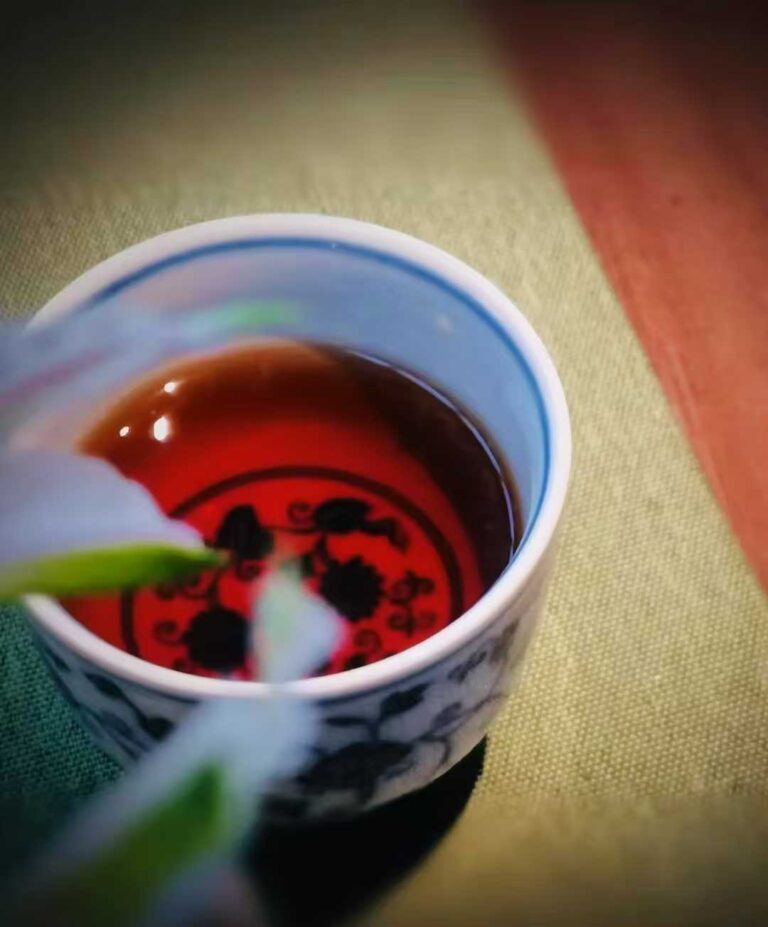
However, in China, the same type of tea is known as hong cha (红茶), which translates literally to red tea. The name comes from the deep amber-red color of the brewed liquor, not the appearance of the dried leaves.
Thus, what Westerners call black tea and what the Chinese call red tea are actually the same thing — only the naming is different.
To make things more complicated, in the West the term red tea often refers to rooibos, a caffeine-free herbal infusion from South Africa that’s not related to the tea plant at all.
2. The Origin of Chinese Red Tea
Chinese red tea, or hong cha, is a relatively young category in the thousands-year-long history of Chinese tea. It emerged during the late Ming to early Qing dynasty in Fujian’s Wuyi Mountain region.
Legend says that when an army passed through a local tea factory, production was delayed, and the freshly picked leaves began to oxidize naturally. To speed up drying, a farmer smoked the leaves over pinewood fires — creating the world’s first black tea, Lapsang Souchong. Its distinctive smoky and fruity aroma became so popular that it inspired generations of tea makers to refine the oxidation process, giving rise to a family of teas the West later called black tea.
3. East Meets West: Two Tea Traditions
After British traders encountered these darker teas in Fujian, they named them “black tea” because of the leaf color. The term stuck as tea trade expanded globally through India and Ceylon (now Sri Lanka). Meanwhile, China continued using hong cha based on the red infusion color.
This linguistic divergence also reflects two very different tea cultures:
- Western black teas (Assam, Darjeeling, Ceylon) are often strong, malty, and served with milk or sugar.
- Chinese red teas (Dian Hong, Keemun, Lapsang Souchong) are smooth, naturally sweet, and appreciated pure, allowing subtle honeyed and floral notes to shine.
4. The Making of Red (Black) Tea
Both Chinese and Indian black teas share the same basic process: withering, rolling, oxidation, and drying.
Yet their character differs due to terroir and craftsmanship.
- Oxidation turns the tea leaves dark and develops the complex theaflavins and thearubigins responsible for the reddish hue and robust flavor.
- Chinese red teas tend to be crafted from the smaller-leaf Camellia sinensis variety, yielding delicate, layered sweetness.
- Indian black teas, often made from Camellia assamica, are bolder and higher in caffeine — a preference shaped by British taste and industrial tea production.
5. Health and Enjoyment
Both Chinese red tea and Western black tea are rich in antioxidants, particularly theaflavins and thearubigins, which may help reduce cholesterol, support heart health, and aid digestion.
In traditional Chinese medicine, hong cha is believed to warm the body, invigorate energy, and balance digestion — especially comforting during colder seasons.
6. Brewing for the Best Experience
- Chinese Gongfu Method:
Use 85–95°C water, short steeps (20–30 seconds), and multiple infusions in a small teapot or gaiwan. This method highlights aroma and texture. - Western Style:
Use 90–95°C water, 3–5 minutes steeping time, 1 teaspoon per 250ml cup. This brings out the tea’s depth and strength.
7. Beyond the Name: A Shared Heritage
Whether you call it black tea or red tea, this is the same remarkable family of fully oxidized teas born in China’s misty mountains. From the smoky sophistication of Lapsang Souchong to the golden sweetness of Dian Hong, these teas have shaped global culture — fueling centuries of trade, diplomacy, and daily ritual.
In the end, the difference between Chinese red tea and Western black tea is not in the leaf, but in the lens through which we see it.
Both names celebrate the same cup — one colored by history, language, and the timeless art of tea.
Would you like me to make this version sound more poetic and brand-styled (e.g., for your Seeknew tea blog)? I can make it flow with cultural storytelling and SEO keywords like “Chinese red tea,” “hong cha,” and “authentic Yunnan Dian Hong.”